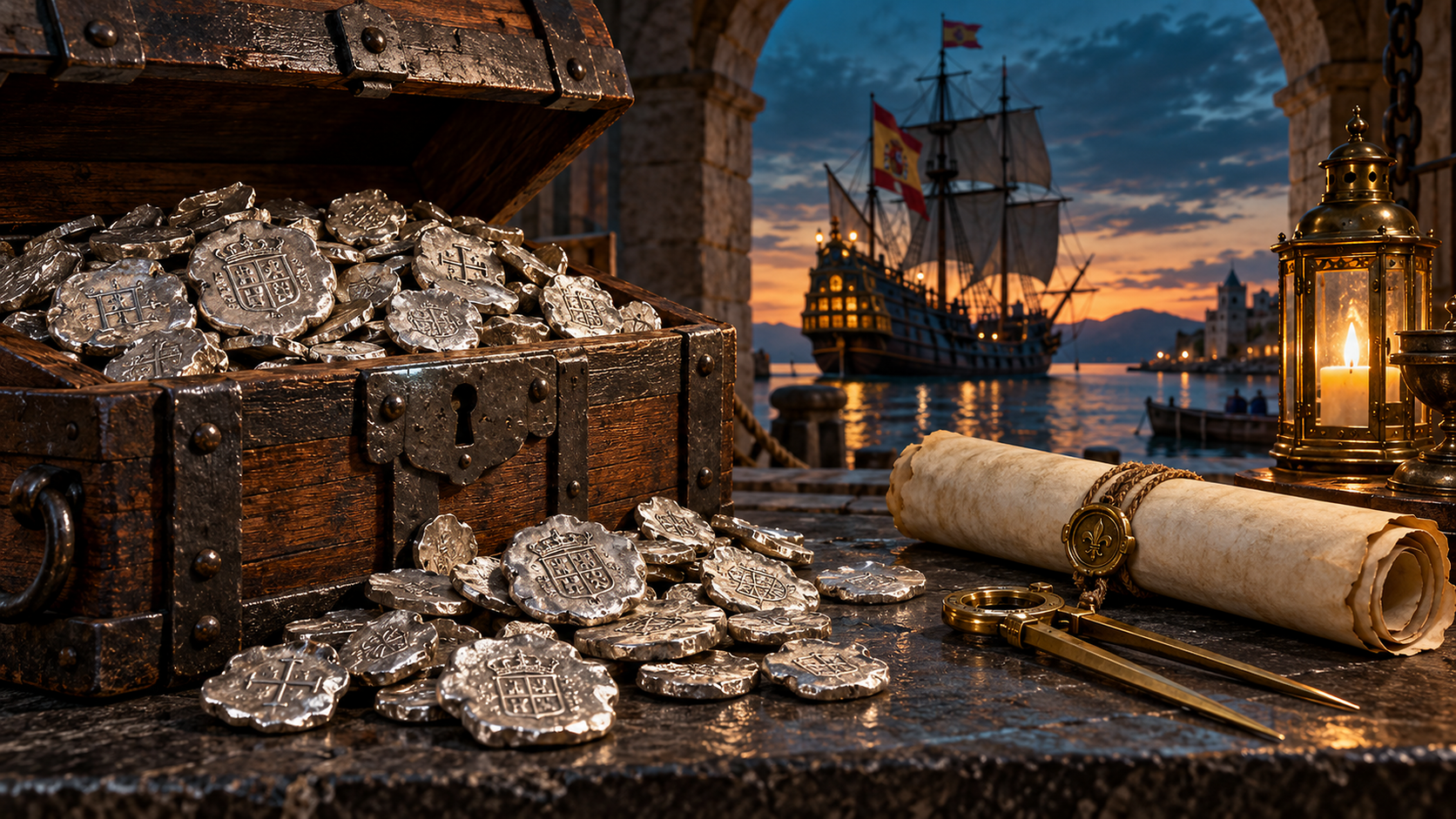
Pick up a silver eight-reales piece from seventeenth-century Potosí or Mexico City, and your first thought might be that someone attacked it with garden shears. It is rarely round. It has thick, irregular edges, flat faces, and parts of the royal coat of arms or cross sliced clean off the perimeter. Collectors and historians call these jagged pieces cobs, from the Spanish phrase cabo de barra, meaning a piece cut from the end of a bar. They look crude, almost accidental, but they were struck intentionally. For nearly two centuries, imperial mint workers used an assembly-line method designed for sheer velocity, turning raw bullion into legally spendable trade currency as quickly as mule trains could carry it away.
The pressure to move silver fast
During the late sixteenth century, the Spanish Empire struck upon some of the most concentrated deposits of silver on Earth. The most famous was the Cerro Rico, a towering red mountain in modern-day Bolivia that fed the royal mint at Potosí, established in 1573. In terms of sheer output, the mountain produced thousands of tons of metal. At the same time, colonial mints operated in Mexico City and Lima, processing silver from mines like Zacatecas and Guanajuato. But there was a logistical dilemma: Spanish law strictly forbade the export of unminted raw silver bullion by private citizens, requiring precious metal to be converted into coin, assessed for the crown's fifth (the quinto real), and officially stamped.
The royal fleets, known as the Flota de Indias, sailed on strict seasonal schedules dictated by trade winds and hurricane seasons. If miners and merchants missed the departure of the galleons from Havana, Portobelo, or Veracruz, their wealth was stranded for a year or more. The colonial mints had to process thousands of pounds of silver arriving from high-altitude refineries in a matter of months. Mint masters had neither the time nor the equipment to produce polished, perfectly circular coins. They needed a minting technique that was ruthless in its efficiency, requiring minimal mechanical upkeep and delivering acceptable legal bullion for sea voyages.
Pouring the bullion into long bars
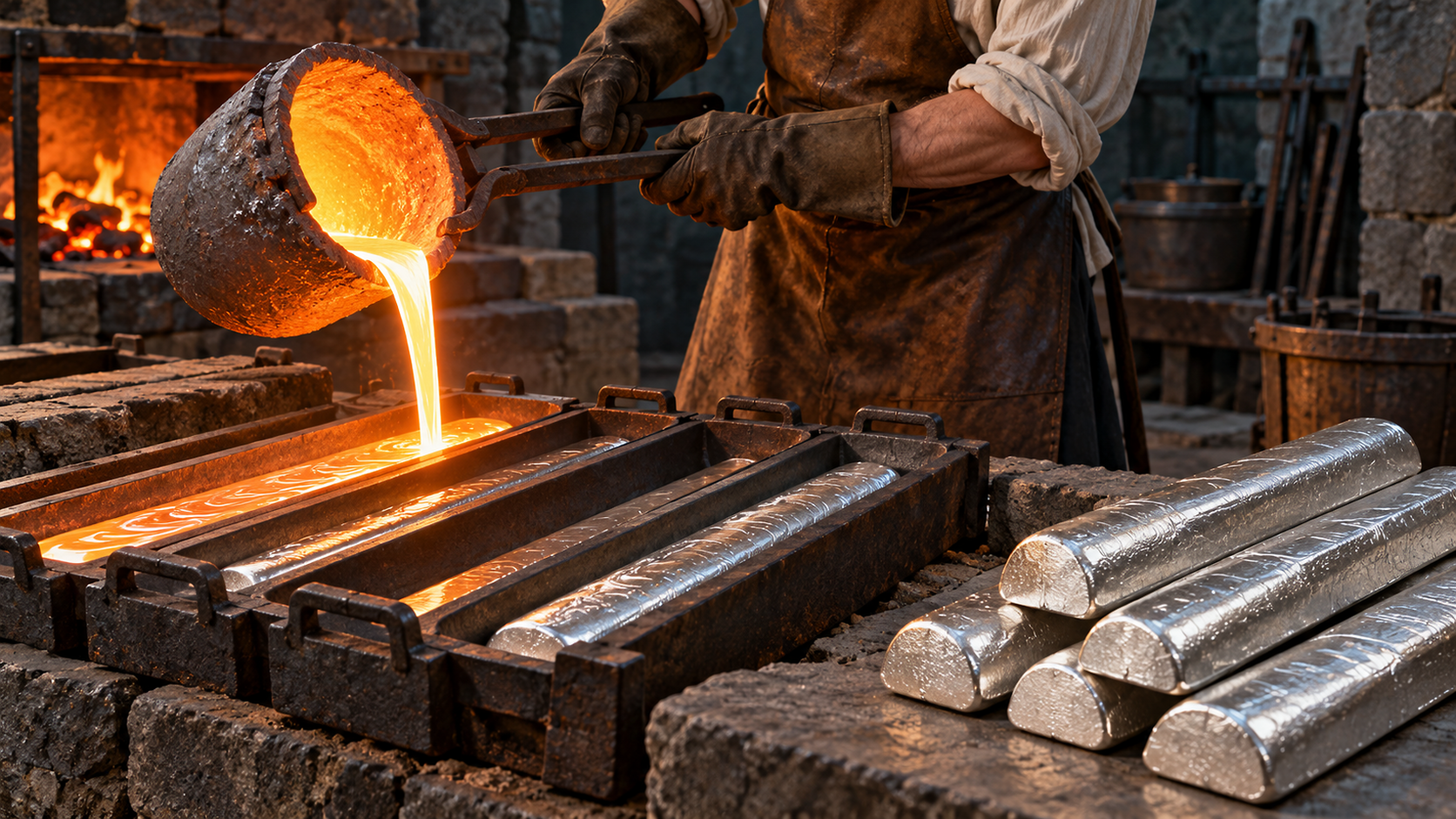
The minting journey began in the foundry room of the mint, where native laborers and enslaved Africans worked in blistering heat around open charcoal hearths. Refined silver arrived at the mint in large, porous loaves or ingots that had been recovered using the patio process, a method that used mercury to leach microscopic silver particles out of crushed ore. This silver had to be melted down in large crucibles to test and homogenize its purity.
The legal standard for Spanish colonial silver, known as ley, was set at 11 dineros and 4 grains, or roughly 93.06 percent pure silver, with the remainder composed of copper to add hardness. Once the melter brought the silver to the exact alloy, workers did not cast the metal into flat, broad plates. Instead, they poured the red-hot liquid into long, shallow sand molds or iron troughs. This formed narrow, rectangular or semi-cylindrical bars, roughly the thickness of a human finger or thumb. These long rods were cooled, quenched, and carried straight to the cutting benches.
Shearing the planchet from the rod
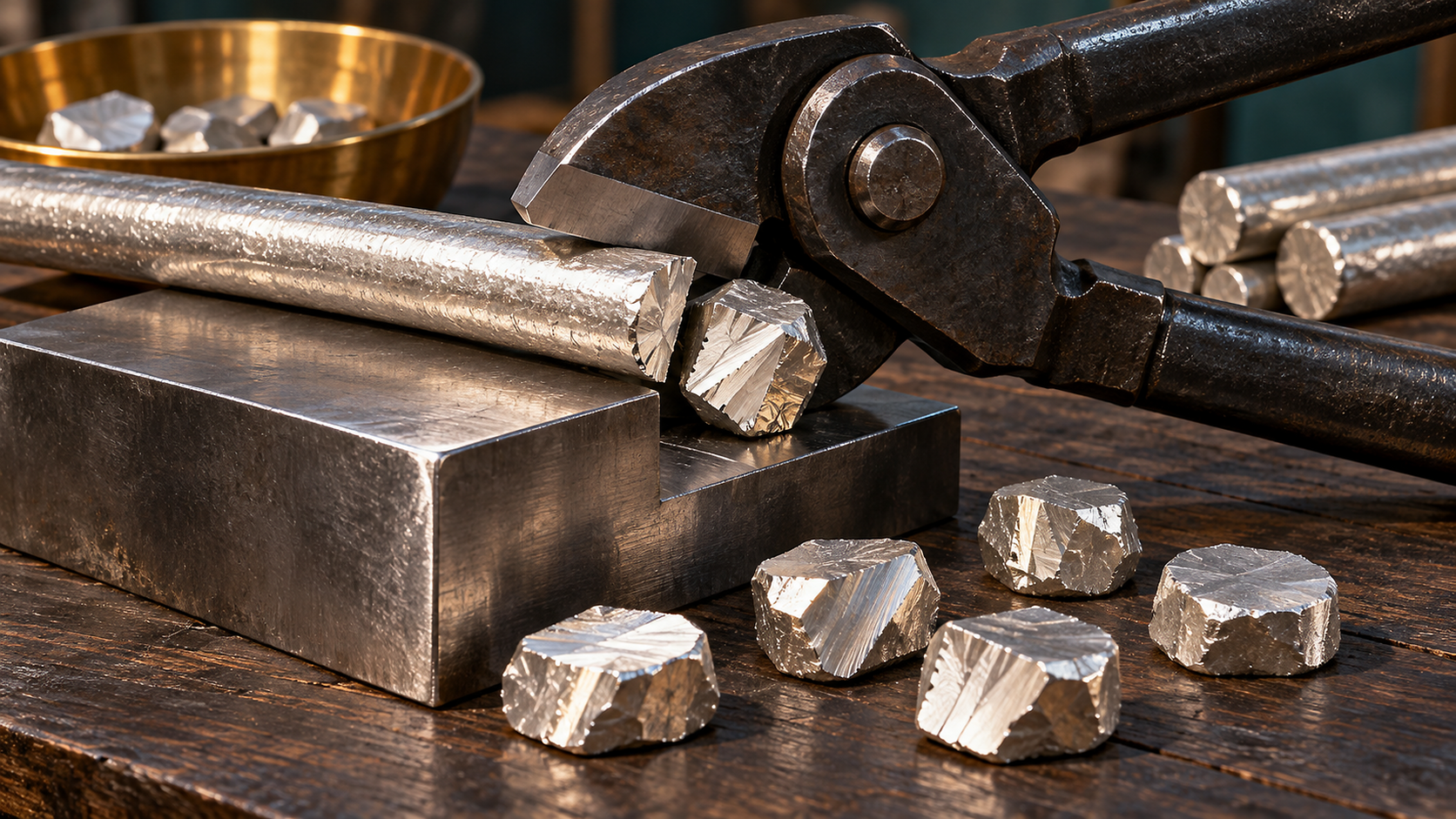
In European mints of the same era, metalworkers often took rolled plates of metal and punched out round discs using circular cutters. That process left behind excess metal webbing that had to be gathered, remelted, and cast all over again, consuming fuel and labor. The Spanish cob method skipped that waste entirely. Instead, a metalworker took the cast silver rod and rested it across an anvil block.
Using heavy iron shears known as cizallas, or a cold chisel struck with a sledgehammer, the worker chopped the rod into crosswise segments. Because the bar was shaped like a long loaf of French bread, each slice was a squat, chunky nugget of solid silver. Each of these nuggets was the rough embryo of a coin, known technically as a planchet or blank. Because the cuts were made quickly by eye and hand, no two chunks ever had the exact same geometry. Some were oblong, some wedge-shaped, and others resembled little rectangular tiles with sheared, pinched ends.
Trimming to statutory weight
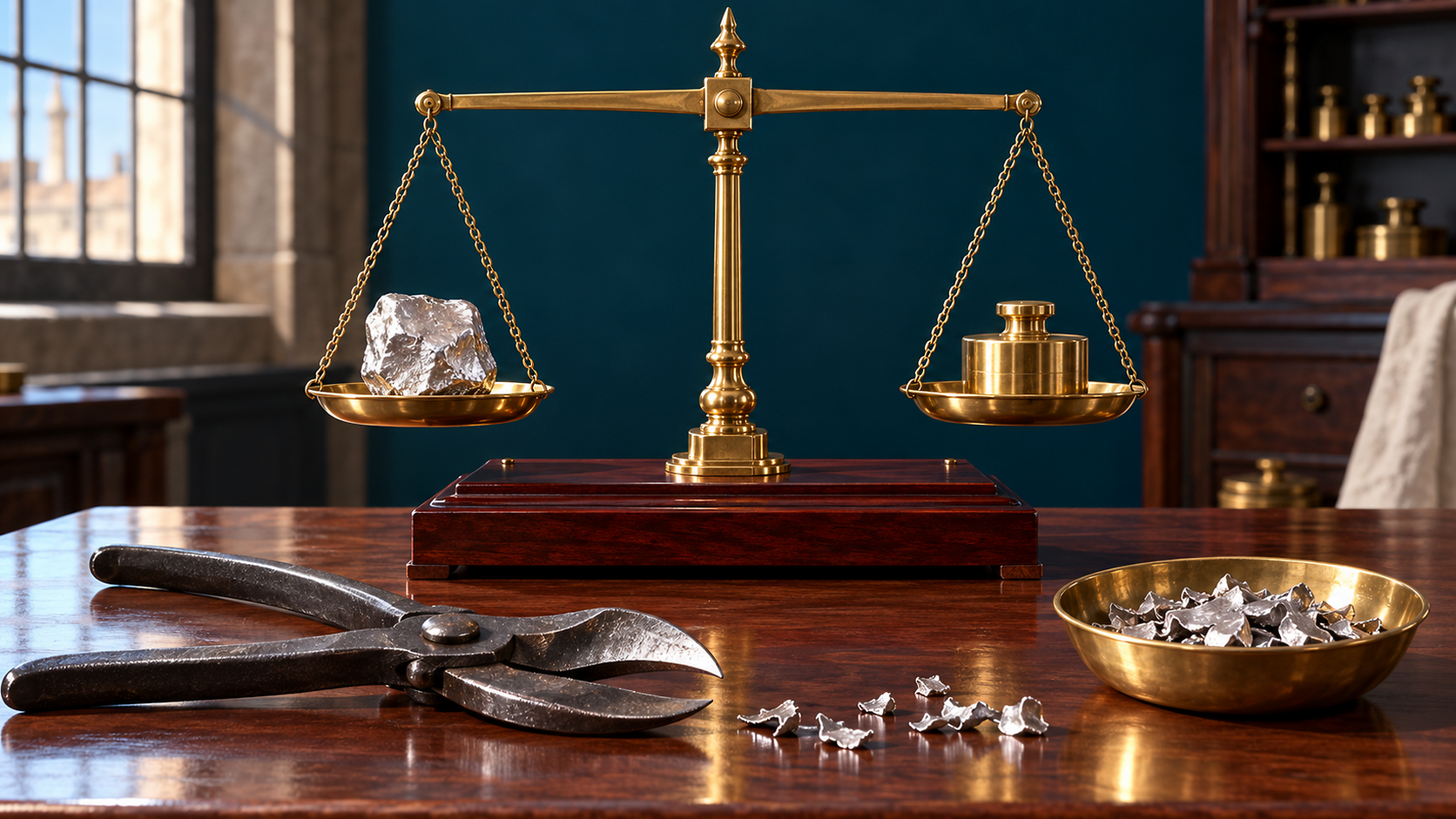
In early modern commerce, coins did not trade on their aesthetic beauty; they traded on the weight and purity of their metal. A colonial merchant or an overseas buyer in China or Amsterdam cared that an eight-reales piece contained approximately 25.5 grams of pure silver. If the weight was accurate, the shape of the coin made no difference. Therefore, the most critical step in cob production took place at the scale bench.
Weigh-masters held sensitive balance scales against official crown weights. If a cut chunk proved too light, it was thrown immediately back into the melting pot to be melted down into the next batch. If it was too heavy, as most were on purpose, an artisan sat with heavy shears and snipped off corners or edges until the balance settled dead level. These snips, or recortes, fell into bins to be remelted. The result was a multifaceted, angular lump of metal that matched the legal statutory weight to within a fraction of a grain, even if it looked more like a flattened rock than official money.
Striking the blank with hand dies
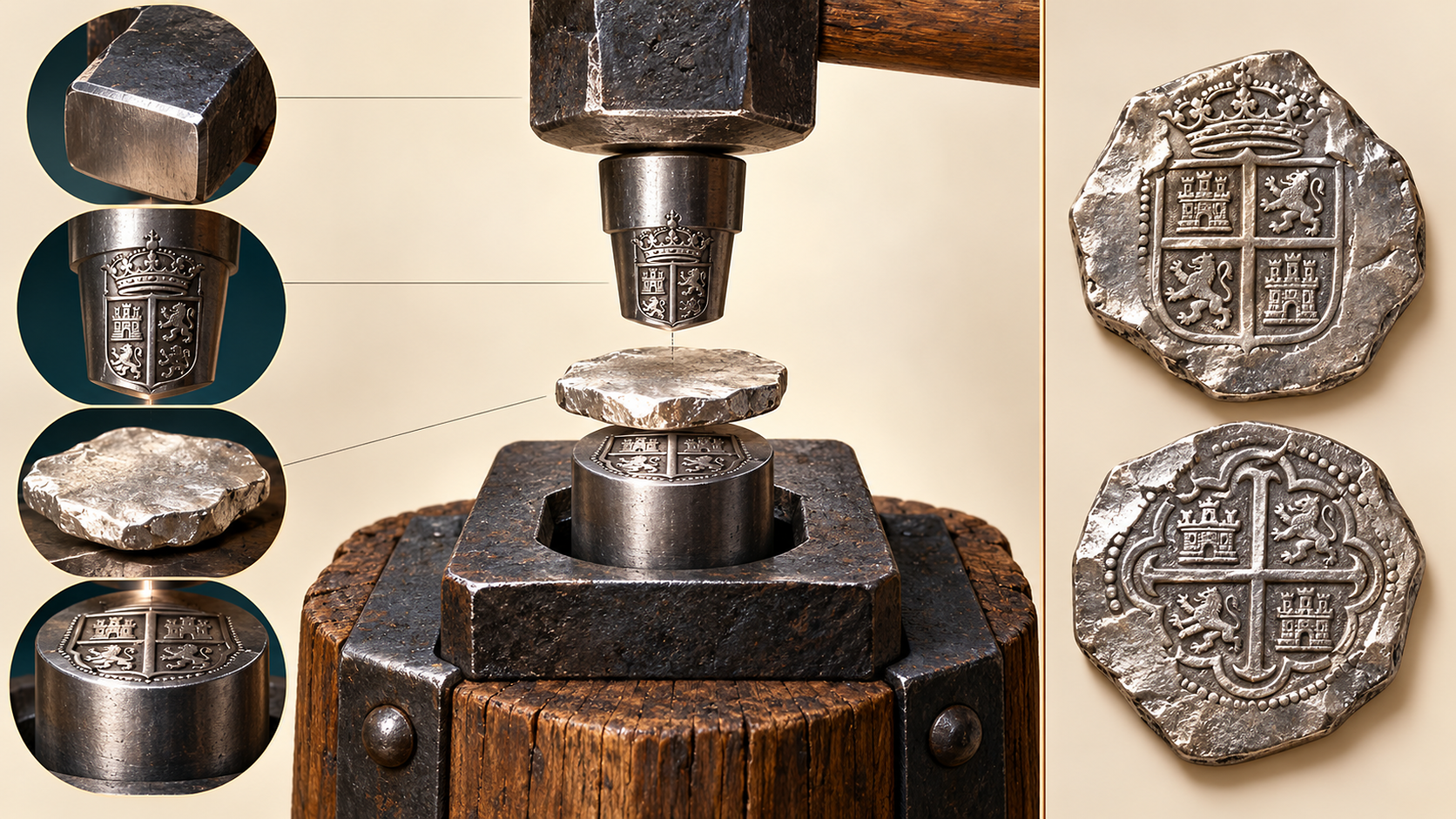
Once trimmed to weight, the cold metal nugget was often too hard and brittle to receive a clear stamped design without cracking. Workers softened the blank through annealing, heating it to a dull red glow and letting it cool. Once annealed, the planchet was ready for the coiners, who worked in pairs or small teams around an anvil.
Cob minting used handheld iron or steel dies engraved with negative relief impressions of royal heraldry.
The striker held the upper die with one hand or with iron tongs, resting it squarely on top of the planchet, and brought down a heavy two-handed sledgehammer with full force. A single heavy blow or two rapid strikes pushed the soft silver out into the crevices of both dies at once. Because the blank was unevenly thick and rarely flat, the hammer blow rarely transferred the entire design. The center of the coin might capture the lion and castle clearly, while the outer date, mint mark, or royal motto vanished over the bevelled edge of the planchet.
The coining process relied on two basic engraved tools that worked simultaneously:
- The lower anvil die, known as the pila, which was set firmly into a heavy wooden block or post and bore the royal coat of arms.
- The upper punch die, known as the trusel, which was held by hand and bore the cross of Jerusalem or the Pillars of Hercules.
The role of the assayer mark
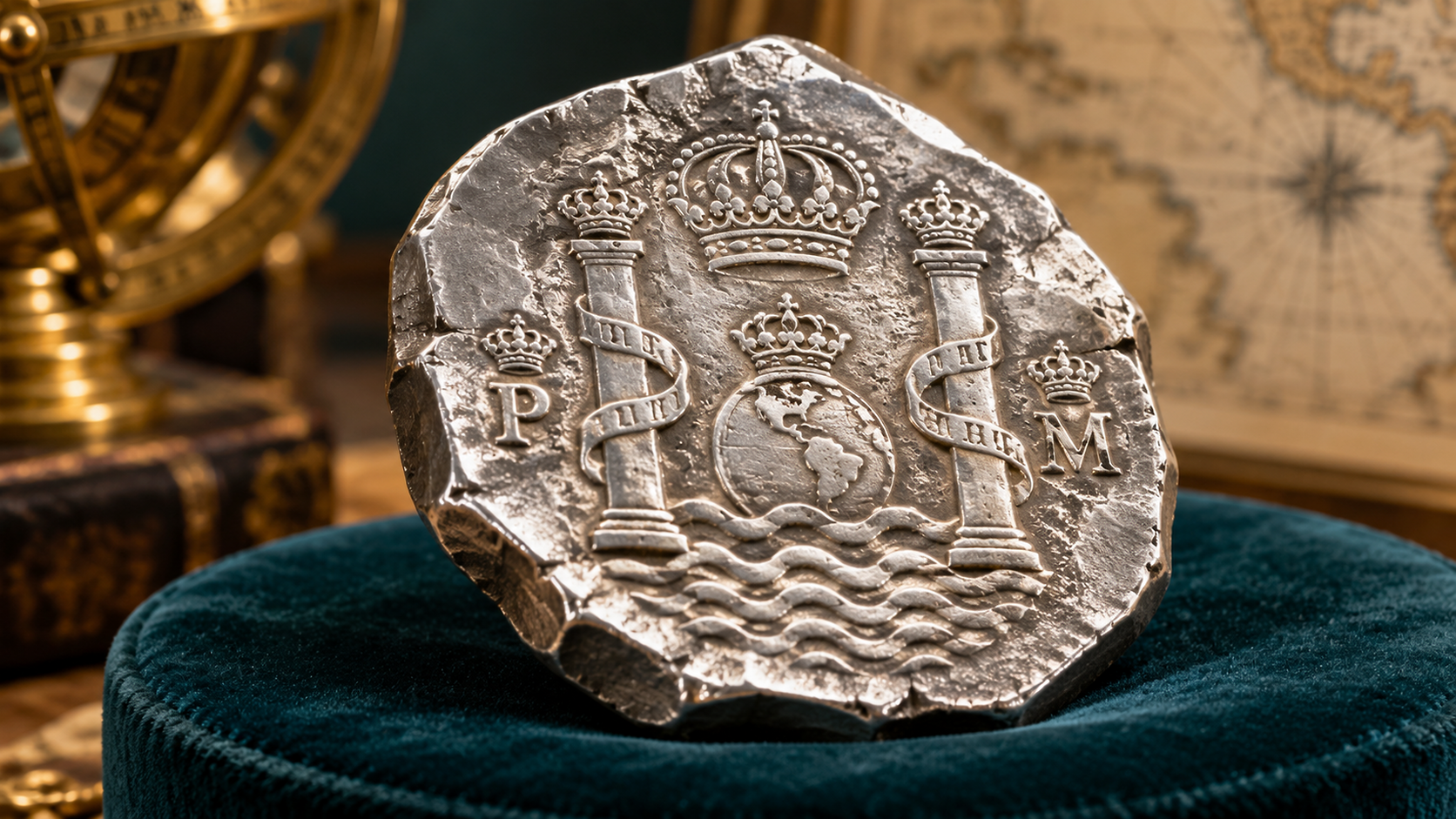
Because cobs were so misshapen, anyone could theoretically take a chisel to an authentic coin and shave off a gram of silver before spending it. To protect trust in the currency, royal ordinances strictly required that every coin display two critical details: the mint mark and the initial of the assayer (ensayador). The assayer was the sworn official at the mint responsible for testing the metal and guaranteeing that it met the required legal fineness.
If an assayer allowed debased silver to leave the mint, the mark identified him immediately. In the 1640s, a massive scandal erupted at Potosí when corrupt assayers colluded with local merchants to debase millions of cobs down to 70 or 80 percent silver. When the debased coins flooded European and Asian markets, trust collapsed. King Philip IV sent a royal investigator who uncovered the fraud, resulting in the public execution of the guilty assayer and mint officials. To restore international faith, Potosí completely redesigned its cobs in 1652, adopting the famous 'Pillars and Waves' motif and stamping the assayer's initial and the date in multiple places across the coin.
The end of the hammer and the rise of the mill
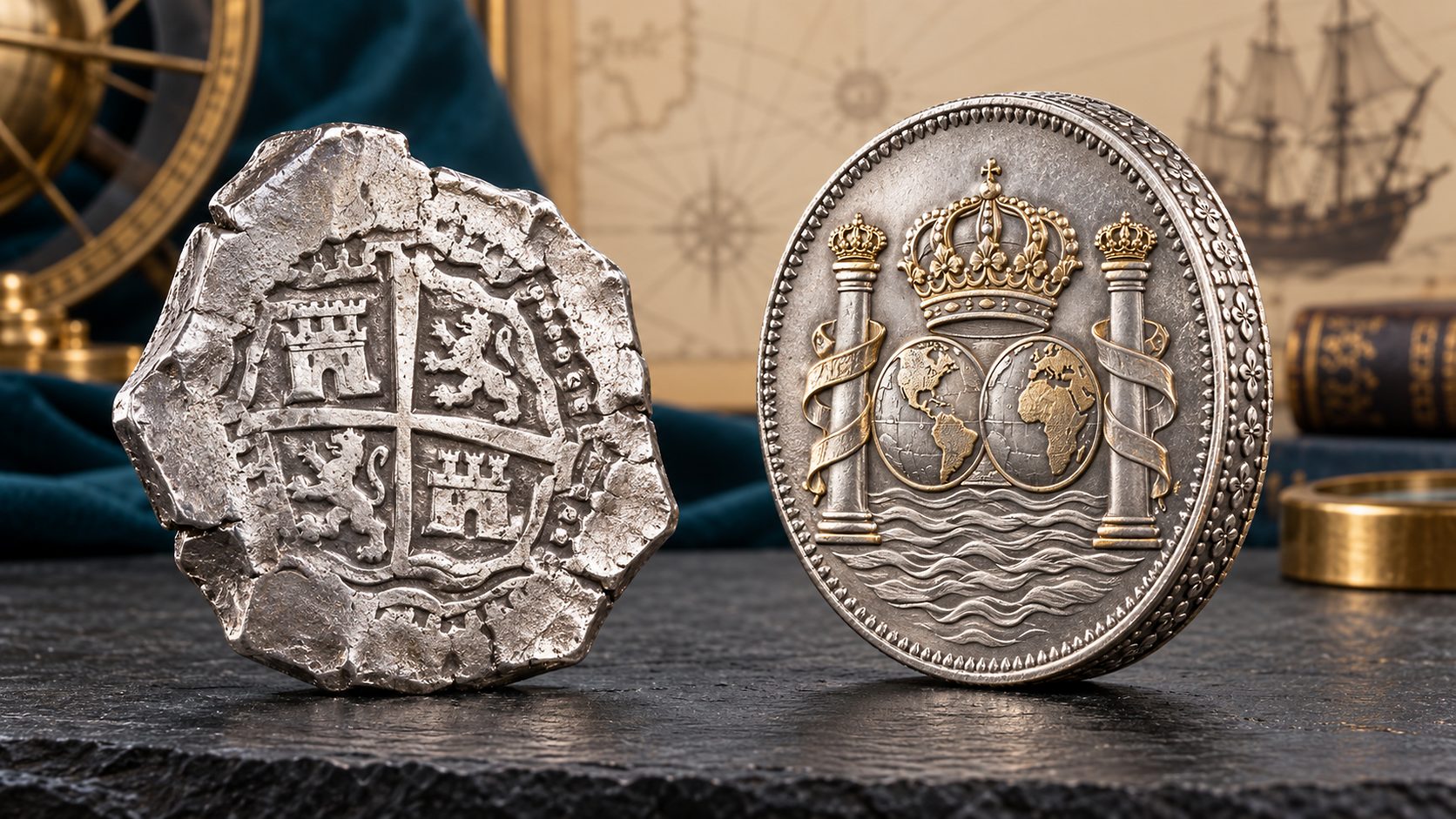
The cob technique served the Spanish Empire brilliantly for nearly two centuries, turning out billions of dollars worth of silver that fueled global commerce. Yet the very method that made cobs fast to produce made them vulnerable in everyday life. Because the outer rim was jagged and unmarked, dishonest merchants shaved tiny slivers of silver from the edges of every cob that crossed their counters. Over months of handling, an eight-reales coin could lose a fifth of its actual value before an unwary buyer realized it was underweight.
By the early eighteenth century, European mints had adopted mechanical screw presses and edge-milling machines that produced perfectly round coins with decorated rims, making clipping impossible to hide. Spain recognized that cobs were an outdated liability. In 1732, the Mexico City mint installed imported water- and mule-powered screw presses, retiring the hammer and punch. Mexico began producing the celebrated columnario, or milled pillar dollar, featuring sharp details and an intricate leaf pattern pressed into the edge. Potosí and Lima held on to the old cob method longer, but by the 1770s, the crude, hand-hammered cob had vanished forever from the royal mints, leaving behind a legacy of irregular coins that had financed global trade for two hundred years.
Further reading
Explore the subject further with these references.
American Numismatic SocietyExternal reference · Opens in a new tab Banco Central de la República Argentina, Potosí Mint HistoryExternal reference · Opens in a new tab Casa de Moneda de México Historical ArchivesExternal reference · Opens in a new tab